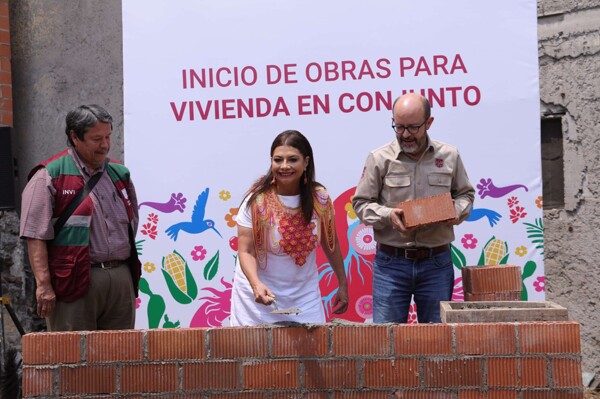
The Committee states that in Mexico there are systematic and widespread patterns of disappearances, impunity, and failures in searching, and in many cases, families are doing the work that should be done by the State. As detailed by LPO, the 4T categorically rejected the report by the United Nations Committee on Enforced Disappearances by ensuring that most of its data covers past presidencies of the PAN and the PRI and that it has limited and outdated information. "We are in the midst of a totally overwhelmed crisis," he considered. The country faces a serious allegation about the possible existence of enforced disappearances with government responsibility. In turn, local deputy Liz Salgado stated that "Mexico needs a serious institutional response" and a "policy that puts victims at the center and not the defense of the government." In recent hours, different figures from the blue and white party have taken up what the United Nations exposed to point to the government of Clara Brugada. One of these people was the local deputy for the migrant quota, Raúl Torres, who stated that the 4T's attempts to "discredit the UN do not eliminate the evidence of complicity, omission, or collaboration by authorities." "The attempt to reduce figures does not solve the crisis, it hides it; and by doing so, it breaks the trust with the victims and weakens the country's credibility before the world," he added and qualified the 4T's response as a "strategy" that seeks to protect the governments of Andrés Manuel López Obrador and Claudia Sheinbaum. The local leadership of the National Action Party also joined the criticism of both local and federal government. This time, the issue is the report presented by the UN on disappearances in Mexico, an issue that the PAN seeks to exploit to advance its criticism against Morena. "It leaves much to be desired," shot the head of government, Clara Brugada, who stated that the report "seems to lack technical rigor." Tabe demands more resources for the World Cup, but CDMX dismisses it: "The budget is enough." In this regard, Salgado described the Mexican State's response as "erroneous and insufficient" since, she argued, "it is limited to rebutting the concepts and terms used by the Commission." "The problem is that this response does not get to the bottom of the problem," she deepened to open a new chapter of polarization and tensions in the national capital that could deepen more this week when the Palace of Donceles resumes its ordinary work and as next year's elections approach. More than a year before the midterm elections to be held in 2027, polarization in the national capital persists and revives with every issue that crosses the national or local agenda. Vice President, Luisa Gutiérrez Ureña, demanded the government "not resist accepting this cruel phenomenon" and warned that in the first quarter of the year, 242 cases of missing persons were registered in the national capital. "The country faces a serious allegation about the possible existence of enforced disappearances with government responsibility," she criticized and considered that the government's response "does not reduce pressure, but increases it" because "it confirms that there is no willingness to recognize the problem or to correct it." Brugada announced 4,500 homes in the Historic Center and the new rent law.